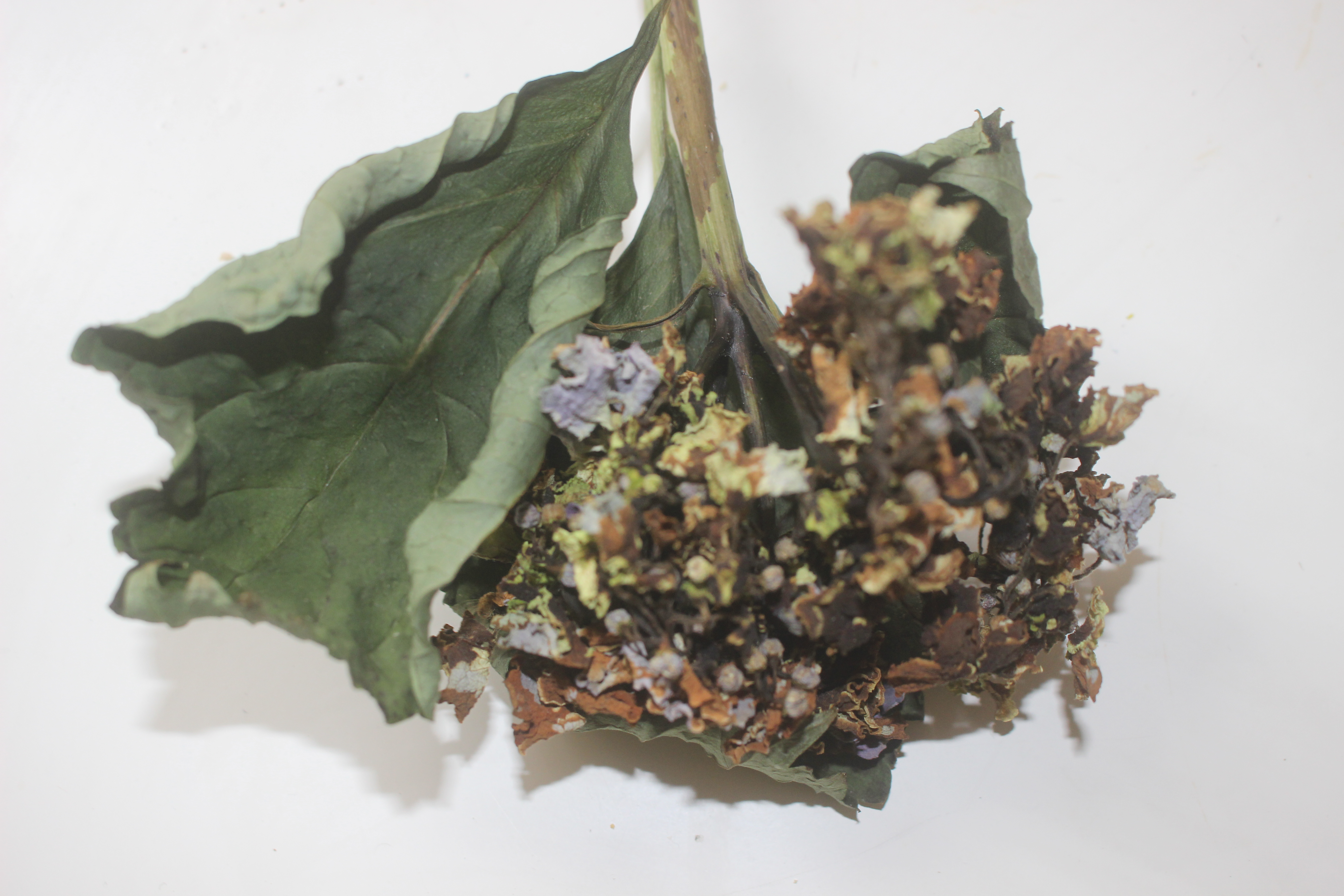
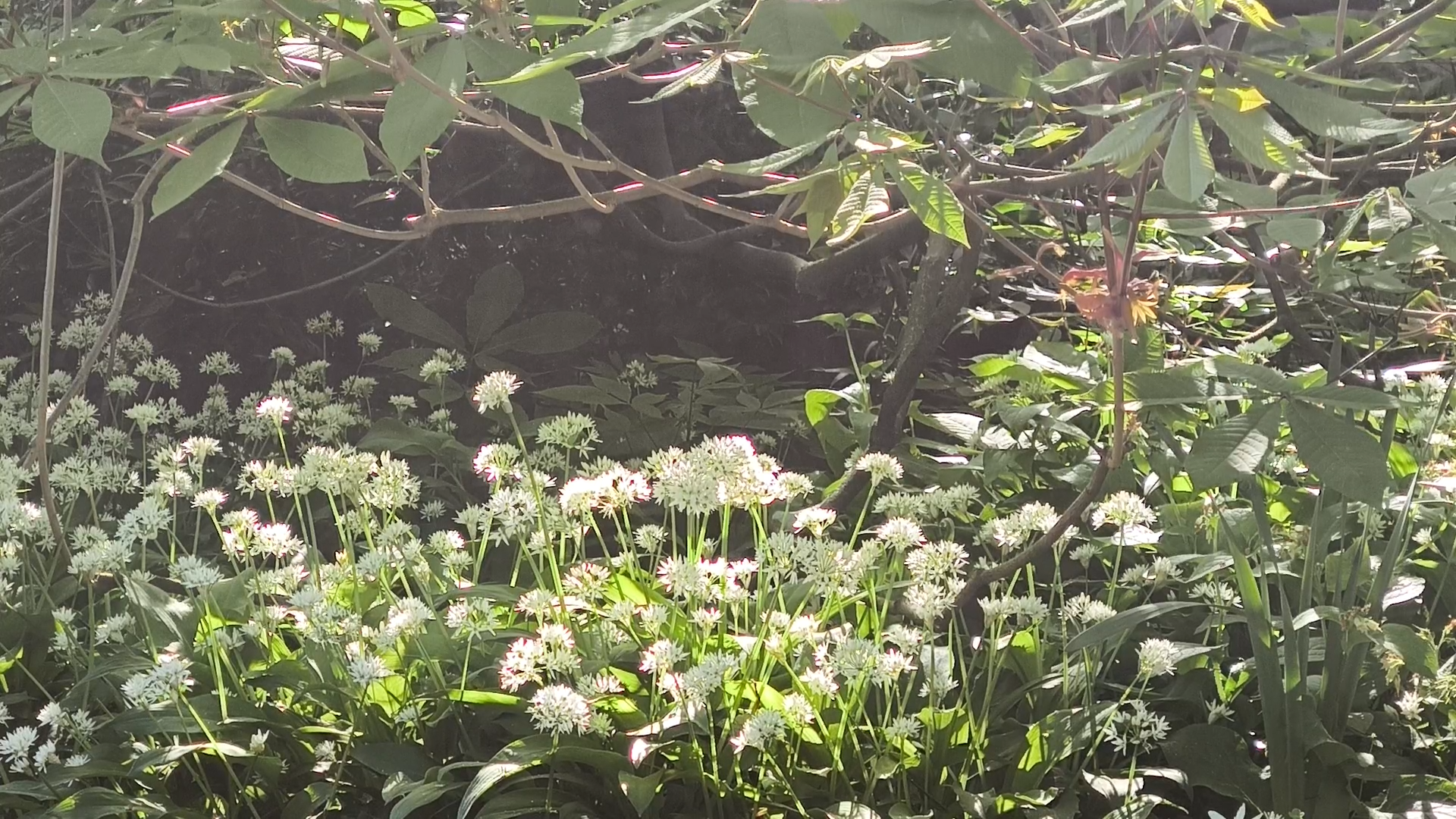
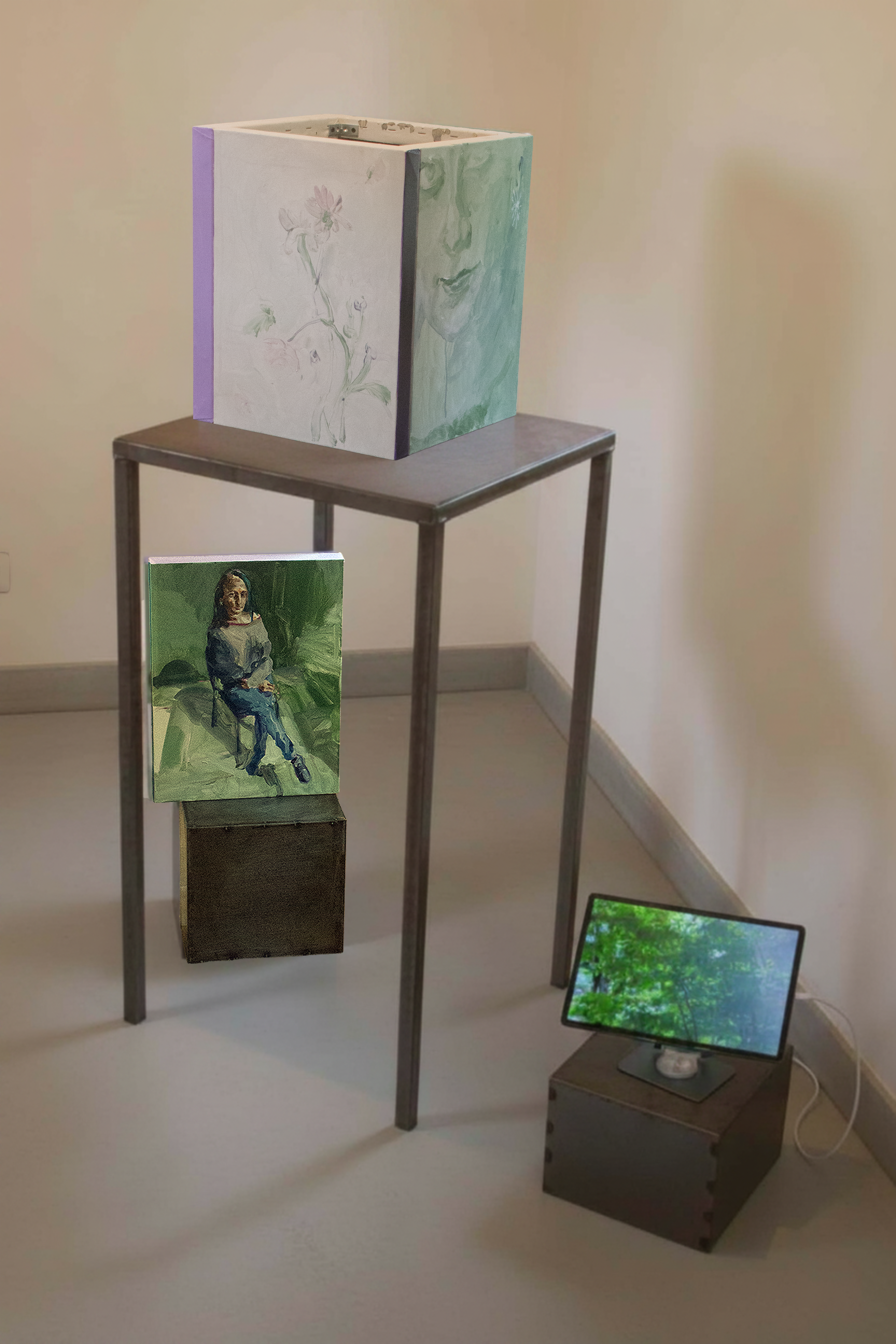
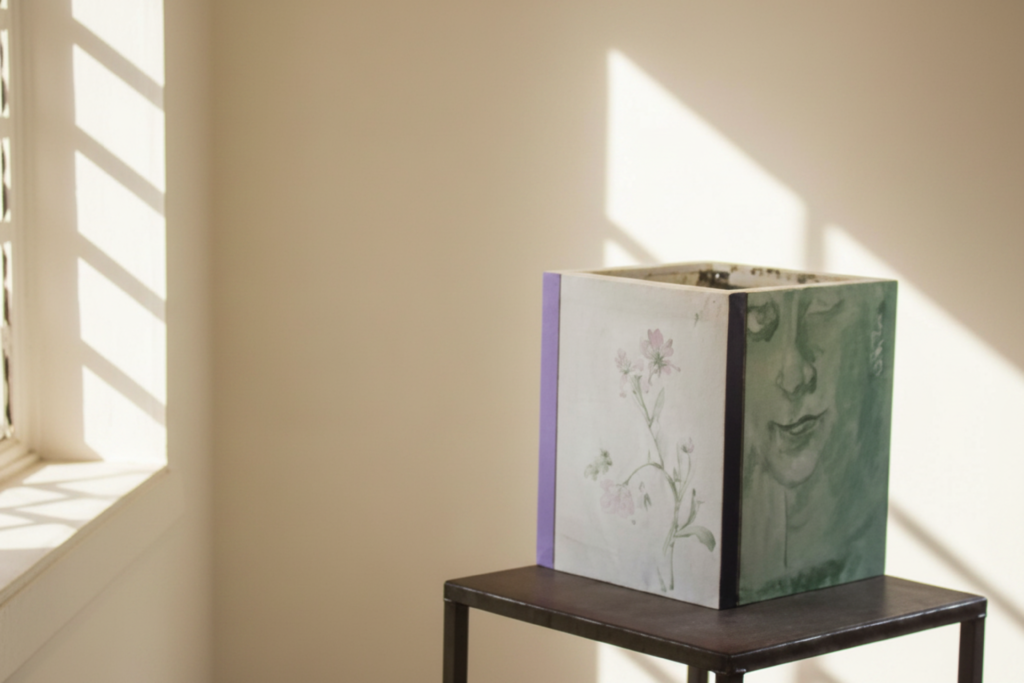
Il nuovo “ritratto” dal titolo Herbier de prison è dedicato alla figura di Rosa Luxemburg. L’installazione video, fotografica e pittorica, vede la Luxemburg evocata attraverso un dialogo tra sfera pubblica e dimensione privata. Alla sua rilevanza storica e politica — legata alla riflessione sui processi collettivi e sui sistemi — si affianca un interesse meno evidente ma persistente per il mondo vegetale, inteso come ambito di attenzione, cura e catalogazione.
Questo doppio registro costituisce l’asse dell’opera, suggerendo una possibile coesistenza tra pensiero rivoluzionario e pratica quotidiana di osservazione del di un mondo in scala ridotta ma che contiene comunque i principi di cura e attenzione che Rosa applica al pubblico e che sviluppò anche durante la sua prigionia..
Nel rapporto tra video, fotografia e pittura emerge una tensione tra movimento e immobilità, tra dimensione impersonale e presenza individuale. O comunque una riflessione sulla percezione del Tempo. L’installazione nel suo insieme definisce così uno spazio di coesistenza, in cui la figura di Rosa Luxemburg non è proposta come icona, ma come campo di possibilità interpretative, sospeso tra scala macro e micro, tra elaborazione teorica e pratica dell’attenzione. Herbier de prison è il libro che raccoglie gli erbari creati dalla Luxemburg durante la prigionia.
The new “portrait” titled Herbier de prison is dedicated to the figure of Rosa Luxemburg. The video, photographic, and pictorial installation evokes Luxemburg through a dialogue between the public sphere and the private dimension. Her historical and political significance—linked to her reflections on collective processes and systems—is paired with a lesser-known yet persistent interest in the plant world, understood as a realm of attention, care, and cataloging.
This double register forms the core axis of the work, suggesting a possible coexistence between revolutionary thought and the daily practice of observing a world on a smaller scale—one that nevertheless contains the principles of care and attention that Rosa applied to the public sphere and also developed during her imprisonment.
Within the relationship between video, photography, and painting, a tension emerges between movement and stillness, between the impersonal dimension and individual presence—or, at the very least, a reflection on the perception of Time. Taken as a whole, the installation thus defines a space of coexistence where Rosa Luxemburg is presented not as an icon, but as a field of interpretative possibilities, suspended between macro and micro scales, and between theoretical elaboration and the practice of attention. Herbier de prison is the book that collects the herbaria created by Luxemburg during her captivity.